MARMAC® CONCRETE PROTECTION SYSTEM
Stop Sewer
Corrosion
Before It Starts.
Engineer concrete to last for generations
Precast sanitary sewer & stormwater systems (manholes, concrete pipe, culverts…) are failing early — not from age, but from acidic wastewater, polluted groundwater infiltration, chemical runoff, and microbial-induced corrosion (MIC). MarMac®’s two-product protection system delivers inside-out, lifetime defense that extends serviceable life beyond 90 years.
$15B+
Annual U.S. Sewer Repair Costs
D+
ASCE Rating for U.S. Sewer Systems
90+
Year Serviceable Life, Treated
99.999%
Bacterial Kill Rate (ISO 22196)
THE PROBLEM
MIC is destroying your
Infrastructure
"The primary cause of sanitary sewer & stormwater system failure is Microbial-Induced Corrosion — and most of it is entirely preventable."
In anaerobic sewer environments, sulfate-reducing bacteria thrive in biofilm on pipe walls, converting sulfates into hydrogen sulfide gas (H₂S). That gas reacts with moisture to produce sulfuric acid — relentlessly eating away at your concrete from the inside out through three progressive stages.
Untreated concrete manholes and pipe reach structural failure in as few as 25 years. For municipalities, that means emergency repairs, service disruptions, environmental liability, and the ongoing political cost of failing public infrastructure.
3 Stages of MIC in Untreated Concrete
1
CO₂ & H₂S lower concrete surface pH. Microorganisms begin to colonize. Onset: 0–10 years.
2
Thiobacillus biofilm thrives as pH drops below 4. Sulfuric acid production accelerates. Years 10–20.
3
Acid penetrates porous concrete, destroying the cement binder. Structural failure imminent. Years 20–25.
Conventional remedies — thicker walls, denser mixes, fiber reinforcement — only delay failure. They do not address the source: thiobacillus bacteria.
THE SOLUTION
Two products.
Total protection.
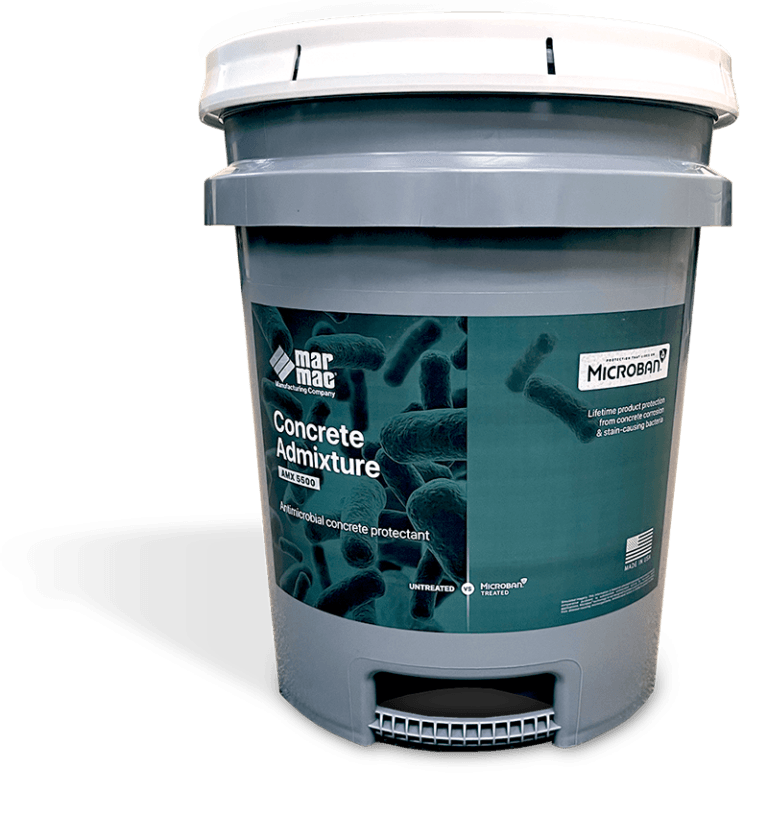
Concrete Admixture • Built-in Protection
AMX 5500
Microban®-powered Antimicrobial
- Fights bacteria, fungi, mold & mildew from within the concrete
- 99.999% bacterial kill rate after 24 hours (ISO 22196)
- No changes to mix cure time, finishability, or appearance
- 40% stronger than untreated concrete (ASTM C1904-20)
- Up to 89% compressive strength retention vs. untreated
- BABA compliant — qualifies for federally funded projects
- Ideal for precast pipe, manholes, box culverts, and wet wells
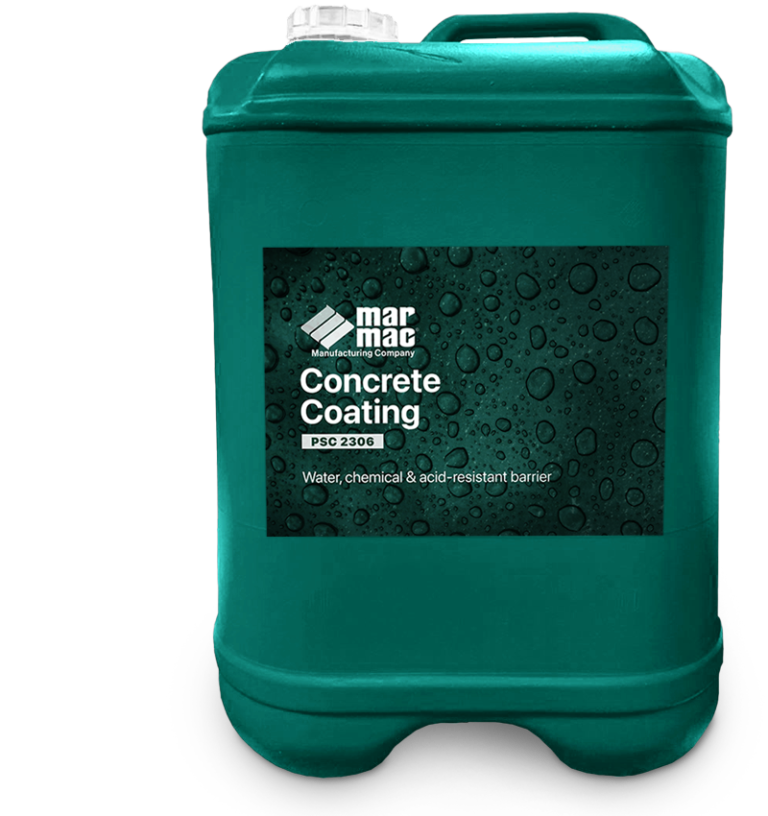
Concrete Coating • Barrier Protection
PSC 2306
Polysiloxane-based surface defense
- Water, chemical & acid-resistant polymer barrier
- Highly hydrophobic – repels moisture before it carries acid in
- One-part (1K) system = no mixing in the field
- Superior adhesion – will not delaminate
- Long term protection – 25 year manufacturer warranty
- Environmentally friendlier alternative to toxic coal tar epoxy
- Easily applied by airless sprayer, roller, or brush
COMBINED SYSTEM PERFORMANCE
Together,they beat MIC at every stage.
💧
PH DEFENSE
AMX 5500's high-alkaline formulation extends the initial pH buffer period, majorly delaying the onset of microbial colonization.
🛡️
ACID BARRIER
PSC 2306's hydrophobic polymer barrier prevents acidic water from penetrating the concrete matrix, stopping acid attack on the cement binder.
🦠
BACTERIA ELIMINATION
Microban® molecular spikes in AMX 5500 continuously rupture bacterial cell walls, preventing colonies from ever establishing themselves.
Treated Manholes
Reach 90+ Year Service Life*
~25
Years - Untreated
92+
Years - Combo System Treated
THIRD-PARTY VALIDATION
Tested. Proven. Certified.
Oregon State University-
College of Engineering
ASTM C1904 Standard
EMSL Analytical, Inc.
ISO 22196 (JIS Z2801) Standard
PSC 2306 Adhesion Testing
ASTM D7234 Standard
AMX 5500 Chemical Resistance Testing
ASTM C1898 Standard (Modified)
PSC 2306 Chemical Resistance Testing
ASTM C1898 Standard (Modified)
TAKE THE NEXT STEP
Make infrastructure last for generations.
Our engineers are ready to work with you to get AMX 5500 & PSC 2306 specified and approved for your municipality or project. Fill out the form for additional information and we’ll be in touch quickly, or request a free PDH-credited Lunch & Learn for your team.